
For decades, “lesbian porn” was often less about lesbians and more about what mainstream adult entertainment imagined heterosexual men wanted to see.
Perfect bodies, exaggerated performances, carefully staged poses and chemistry that sometimes felt secondary to the camera angle. For queer women watching from the other side of the screen, the result could be strangely disconnected from the intimacy it claimed to represent.
That disconnect helped create space for a very different generation of filmmakers, performers and studios. Among them was Juicy Pink Box, the sex-positive brand founded by former lawyer Jincey Lumpkin, which set out to make lesbian erotica that felt glamorous without becoming artificial, cinematic without losing intimacy, and sexually explicit without treating female desire as decoration.
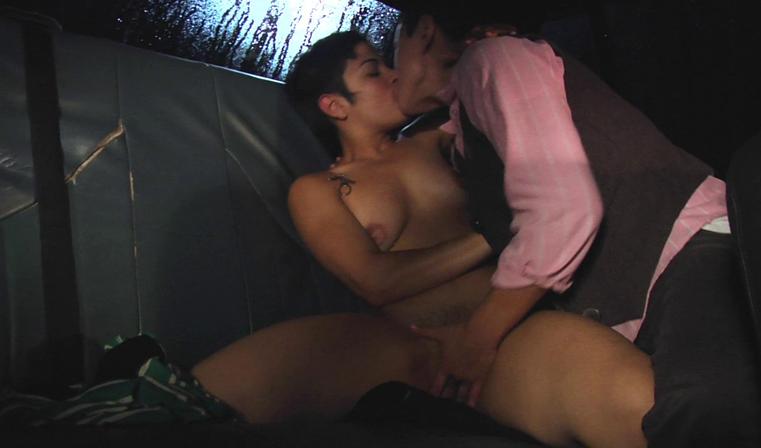
When Lesbian Porn Wasn’t Really Made for Lesbians
The problem was never simply whether the performers identified as lesbian, bisexual or straight. Sexual orientation alone does not automatically create chemistry between two people.
What matters on screen is whether desire feels convincing.
A performer in a mainstream movie does not need to genuinely experience everything her character experiences, but the performance still has to make the audience believe it. Erotic cinema works in much the same way. When attraction, curiosity and pleasure feel forced, viewers notice.
This was particularly visible in an era when mainstream girl-girl scenes relied heavily on a narrow collection of visual clichés. The women often seemed to be performing toward an imagined male spectator rather than toward each other.
For many queer viewers, the problem wasn’t that fantasy was unrealistic. Fantasy is part of the point. The problem was that the fantasy often seemed to belong to somebody else.
Juicy Pink Box Had a Different Idea
Juicy Pink Box emerged at the end of the 2000s with a deliberately different proposition: lesbian erotic films designed around female desire, atmosphere and connection.
Jincey Lumpkin described her original idea as creating lesbian pornography that could be both real and glamorous. Instead of simply reproducing the visual language of mainstream porn, the films used lighting, locations and character context to create something closer to an erotic movie scene.
Importantly, Lumpkin rejected another cliché too: the idea that “porn for women” automatically means elaborate plots and romantic storytelling.
Her approach was subtler. Juicy Pink Box often created a sense of place, character and situation without forcing performers through heavily scripted dialogue. The performers could bring more of themselves into the scenes, allowing the sexual interaction to remain central.
That combination of cinematic polish and less rigid performance helped Juicy Pink Box establish its own identity within the emerging feminist and queer porn landscape.
Taxi, Boutique and the Feminist Porn Awards
The studio’s films quickly gained attention beyond its own audience.
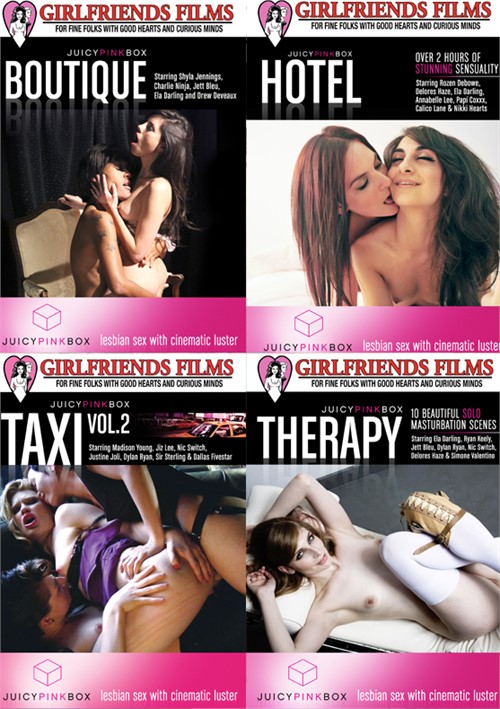
Taxi, directed by Jincey Lumpkin and Maria Angel, won Hottest Lesbian Vignette at the 2011 Good For Her Feminist Porn Awards.
A year later, Boutique won the same category at the 2012 awards, while several Juicy Pink Box productions including Hotel, Therapy and Taxi Vol. 2 also appeared among that year’s nominees.
The films featured performers associated with queer and alternative adult cinema, including names such as Syd Blakovich, Jiz Lee and Dylan Ryan.
What made the catalogue interesting wasn’t simply that women were having sex with women. It was the attempt to frame that sexuality differently: less like a category designed to satisfy a formula and more like a space where different forms of female desire could exist on screen.

Who Is Jincey Lumpkin?
Before entering adult entertainment, Jincey Lumpkin worked as a lawyer. She eventually left the legal profession and turned an interest in sex-positive media into an entirely different career.
She became the founder and public face of Juicy Pink Box, combining entrepreneurship, writing, activism and adult filmmaking at a moment when queer women’s sexuality was still considerably less visible in mainstream culture.
Her profile grew quickly. In 2010, OUT Magazine included Lumpkin in its OUT100, recognizing influential LGBTQ+ voices. The recognition helped take both Lumpkin and Juicy Pink Box beyond the relatively small world of alternative adult cinema.
Over the following years, she became known not only as a producer and director, but also as a writer and commentator on sexuality, feminism and queer identity.
Juicy Pink Box Didn’t Stay Frozen in 2010
Perhaps the most interesting part of the Juicy Pink Box story is that its philosophy has continued to evolve.
The original brand was marketed heavily toward lesbians and women interested in exploring same-sex fantasies. Years later, Lumpkin has spoken openly about expanding that perspective.
Rather than defining the brand around a single identity or sexual orientation, the newer vision of Juicy Pink Box embraces a broader spectrum of gender and sexuality, with an emphasis on exploration, inclusion and sex-positive culture.
That evolution feels particularly relevant today. Alternative adult entertainment has changed dramatically since Juicy Pink Box first appeared. Concepts such as ethical production, queer representation, performer agency and authentic chemistry are now part of a much larger conversation.
Juicy Pink Box was exploring many of those questions before they became familiar marketing language.
Why Juicy Pink Box Still Matters
Juicy Pink Box belongs to an important period in alternative adult cinema, when filmmakers and performers increasingly began asking a deceptively simple question: who is this fantasy actually being made for?
Its answer was never that every woman wanted the same thing. Quite the opposite.
The interesting part of Jincey Lumpkin’s philosophy was the rejection of the idea that female sexuality could be reduced to another formula. Some women want romance. Others want something raw. Some want fantasy, experimentation, voyeurism, kink or something they would never necessarily do themselves.
Desire does not become authentic simply because it looks realistic. And fantasy does not become fake simply because it is cinematic.
The sweet spot is chemistry: performers who appear engaged with each other, filmmaking that understands what it wants to communicate, and an audience that feels invited into the fantasy rather than treated as an afterthought.
More than a decade after Taxi and Boutique made their mark at the Feminist Porn Awards, that idea still feels surprisingly current.